© 2017-2026 Shangbaotai Machine Technology (Kunshan) Co., Ltd. All rights reserved. Site Map

Adding an oil sachet or vegetable pack to an instant noodle SKU changes more than the package contents. It adds material preparation, filling, sealing, handling, and another item that must reach the correct noodle pack before closing. A delay or missed delivery in one stream can interrupt the main line.
At Shangbaotai, we begin the integration review with a sachet schedule for each SKU. It identifies what goes into every small pack, how that pack is made, and where it joins the noodle. This article covers sealed powder, dried vegetable, oil, and sauce sachets placed into bag, cup, or bowl packs.
A powder sachet packing machine meters seasoning and forms, fills, and seals the small package. A dispenser handles that finished sachet and places it into the main product flow. The two stages may be connected directly or separated by controlled storage and replenishment.
Our sachet packer for powder and dried vegetables describes vibration-controlled material supply and three-side sealing. Our seasoning equipment range also includes sauce cooking and sachet-dispensing equipment. For oil and sauce packs, define the liquid or paste filling-and-sealing stage separately from sauce preparation and finished-pack insertion.
Mark who supplies each stage, connecting conveyors, inspection, and controls. If another machine makes the oil or sauce sachets, send its discharge format and sample packs to the dispenser supplier. This keeps the review focused on the complete path from seasoning material to a correctly assembled noodle pack.
Give the filling-equipment supplier representative production material and its expected variation. Include fill weight, allowed deviation, product temperature, storage conditions, and the way material is supplied. Different seasoning streams need different feeding and metering reviews.
| Sachet contents | Material details to provide | Filling trial focus |
|---|---|---|
| Powder seasoning | Particle size, bulk density, flow, dust, moisture sensitivity, blend composition | Dose consistency, bridging, blend separation, and powder near seals |
| Dried vegetables | Piece-size range, fragility, bulk density, mix proportions, moisture condition | Gentle feeding, component distribution, breakage, and pieces trapped in seals |
| Oil or liquid seasoning | Viscosity at filling temperature, target dose, flow behavior, any suspended particles | Metering repeatability, nozzle cutoff, drips, and seal cleanliness |
| Sauce or paste | Viscosity range, particle size, separation, temperature, and holding requirements | Product feed, dose uniformity, particle passage, stringing, and changeover cleaning |
Discuss the dosing method after reviewing these properties. Powder, granular blends, fragile pieces, and viscous sauces can require different arrangements. For a dried vegetable packing machine, assess the condition and composition of the packed mix as well as its total weight.
For oil and sauce, specify conditions at the filler rather than only at the cooking vessel. Temperature changes can affect viscosity and dose delivery. Identify any required holding, agitation, transfer, or temperature-control equipment, and include the selected functions in the quotation.
Provide a drawing and filled samples showing overall length, width, thickness, seal margins, tear features, printed marks, and weight. Include the material structure, roll dimensions, and film supplier's sealing information. Confirm the acceptable seal and leakage tests for each product.
Review the filled sachet with both the packing-machine and dispenser suppliers. A pouch can meet the fill-weight target yet handle poorly because it curls, folds, sticks, or varies in thickness. Oil and sauce distribution inside a pack can also change how it lies on a conveyor or passes through a feeder.
Agree on the presentation at the handoff: individual sachets, connected strips, folded chains, or another defined arrangement. If strips are cut during dispensing, include seal spacing, registration, cutting position, and splice handling. Use production film and filled packs to establish the working range.
Start with accepted main packs per minute and the sachet count per pack. Calculate each type separately before reviewing total insertion demand.
Required sachets/min for one type = main packs/min × sachets of that type per main pack.
| Illustrative SKU at 120 noodle packs/min | Count per noodle pack | Required sachet flow |
|---|---|---|
| Powder | 1 | 120 sachets/min |
| Dried vegetables | 1 | 120 sachets/min |
| Oil | 1 | 120 sachets/min |
| Sauce | 1 | 120 sachets/min |
| Complete seasoning set | 4 sachets | 480 individual sachets/min, assembled into 120 sets/min |
This is an arithmetic example, not an equipment rating. A grouped-set dispenser and separate feeders may count their operating cycles differently. Ask the supplier to state whether its speed refers to individual sachets, complete sets, cycles, or accepted main packs.
Shangbaotai's dispenser page publishes a working-speed reference of 180 pieces per minute. Compare that reference with the proposed feeding arrangement, sachet set, lane count, and production samples. The required configuration follows from those details.
For separately scheduled sachet production, compare accepted output over the available working hours. Include film changes, material replenishment, cleaning, rejects, and SKU changes. Set the buffer stock and batch-identification method so the main noodle line receives the right sachets throughout the run.
Our flavor sachet dispenser uses servo-driven dispensing. The integration review establishes how the finished sachets arrive, how they are released, and how their position is maintained until the main pack closes.
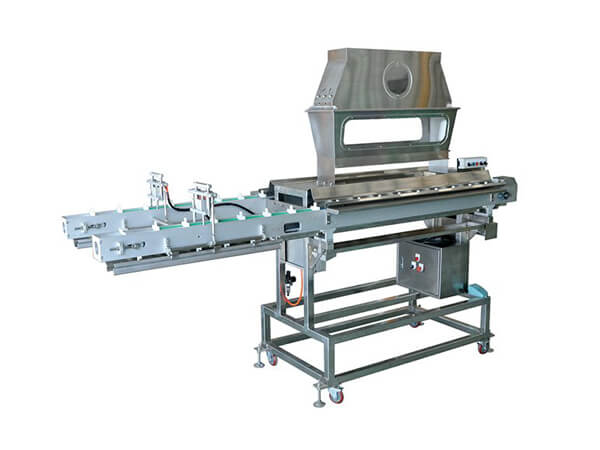
Flavor sachet dispensing equipment from Shangbaotai's product portfolio.
For pillow bags, identify whether sachets are placed on the cake, beside it, or in a grouped arrangement. Provide product pitch and the distance to the film-forming and sealing sections. Test movement through acceleration and transfer so sachets stay clear of the sealing area.
For cups and bowls, draw the cake and sachet positions inside the container. Check available space, loading order, drop position, and lid clearance. A bulky vegetable pack or thick sauce sachet may change the arrangement even when its weight is small.
Test the real pack combination at the intended line rate. Include cups or bowls with their actual shape and rim, the noodle cake, all sachets, and any utensils. Record placement consistency and the condition of the pack as it reaches the closing station.
Agree on checks at two levels. Sachet production needs fill and seal acceptance. Main-pack assembly needs the correct sachet types, counts, and placement. A set can contain the right number of sachets while still including the wrong flavor.
At the sachet packer, define weight sampling or inspection, seal checks, code requirements, and reject removal. Ask the supplier to identify the checks actually supplied by the proposed equipment and the tests performed separately.
At insertion, specify missing packs, double feeds, incorrect variants, damaged sachets, and misplaced packs as separate conditions. Select detection methods around the presentation and material. Count sensors, weight checks, or vision may answer different questions; confirm which conditions each proposed check can detect.
Track a failed insertion to the correct noodle pack and its reject point. Define how the system handles two adjacent failures, reject-device faults, a full collection bin, and restart. Challenge the logic with agreed samples before accepting the integrated line.
Specify how each feeder signals low supply, empty supply, and a blockage. Agree whether the main line pauses, completes the packs already in progress, or diverts affected products. The selected response should preserve the connection between each product and its seasoning set.
During a flavor change, clear old sachets from storage, feeder paths, grouping sections, and partly assembled packs. Include line clearance, recipe selection, code checks, and first-pack approval in the changeover procedure. Confirm how the system distinguishes variants with similar size and weight.
Review access for cleaning and oil or sauce leaks. Filling equipment needs a suitable procedure for the actual material and ingredient changes, while dispensers need accessible paths for removing residues and damaged packs. Include required cleaning time and maintenance tasks in the operating schedule.
Send one application brief covering every seasoning stream and its main-pack destination. Include:
Material samples, fill weights, temperature, flow properties, and allowed variation.
Film specifications, filled sachet samples, dimensions, seal layout, and discharge presentation.
Required counts by SKU, production hours, main-pack speed, and replenishment arrangements.
Bag, cup, or bowl samples with cake, sachets, utensils, and the required loading order.
Conveyor pitch, heights, layout, controls interfaces, detection, and reject requirements.
Cleaning, flavor changes, component traceability, and the agreed acceptance tests.
Our instant noodle packaging RFQ checklist covers the wider packaging scope. Use the sachet brief to define the detailed supply and insertion interfaces within that project.
Run the trial with production materials and filled sachets. Record accepted output by stream, dose variation, seal results, feed failures, complete-set delivery, and accepted main packs. Include replenishment, a flavor change, speed changes, and controlled stops so the team sees how the complete system works during a normal shift.
A dispenser handles finished sachets. Filling and sealing belong to the sachet-production stage. Identify both stages and their suppliers in the equipment scope.
Compare the material streams individually. Their flow, fragility, viscosity, particles, and temperature requirements guide the metering and feeding arrangements.
Multiply main-pack output by the count of each sachet type. Review individual-stream rates and the complete-set delivery rate, using the same counting basis as the quoted equipment.
Presence and flavor identity are different checks. Include the required identification method and changeover controls alongside count and placement verification.
Provide the material at its intended filling conditions, film data, and filled packs. Include normal variation in thickness, flexibility, surface condition, and particle content where relevant.
Contact our team through Shangbaotai's inquiry page with material samples, filled packs, the SKU sachet schedule, target output, and the main-line layout. Request the dosing and sealing scope for each stream, the dispensing arrangement, detection and reject logic, and an integrated trial plan.