
© 2017-2026 Shangbaotai Machine Technology (Kunshan) Co., Ltd. All rights reserved. Site Map

“We need an instant noodle packaging machine for four formats” is too broad for a useful quotation. A rectangular noodle cake entering a pillow bag, a round cake placed in a cup, and a wrapped cake inserted into a retail paperboard carton have different infeed, handling, material, closing, and inspection requirements. A supplier also needs to know where the existing noodle line ends and where its packaging responsibility begins.
In this checklist, carton means a consumer-facing retail paperboard box. It does not mean the corrugated shipping case that holds multiple finished packs. State that distinction in the RFQ: the two operations use different equipment and acceptance criteria.
List every current and planned SKU in one schedule. Give each a code, finished format, noodle-cake type, cake weight and dimensions, seasoning components, packaging materials, target saleable output, and forecast share of production. Mark which SKUs must run at launch and which are future options. A line advertised as “multi-format” may still need separate tooling, lanes, or machines.
Send actual noodle cakes and package samples, including the smallest, largest, and most fragile variants. Drawings should show tolerances, not only nominal dimensions. Measure cake length, width, height or diameter, weight range, shape, orientation, loose fragments, and allowable breakage. Specify whether the cake is fried or uses another approved process, and confirm its temperature and condition at the packaging infeed. Those inputs determine whether the cake can be timed, lifted, turned, or pushed without damage.
Shangbaotai's instant noodle production line page shows rectangular and round cake forms with bag, cup, and bowl packaging examples. Use those as published application examples, then confirm the exact cake and pack combination for this project.
| Format | Buyer-supplied data for the RFQ | Configuration question for the supplier |
|---|---|---|
| Pillow bag | Cake dimensions and orientation; number of cakes; film structure, thickness, width, roll size, print repeat, seal layout, finished bag size, and artwork registration | How are cakes and seasoning sachets synchronized, wrapped, sealed, coded, and rejected without cutting or crushing product? |
| Cup | Top and bottom diameters, height, taper, wall and rim details, cup material, cake size, sachet set, lid construction, decoration, and finished pack dimensions | Which cup supply, cake loading, sachet insertion, lid placement or sealing, inspection, and discharge modules are included? |
| Bowl | Rim profile, top and base dimensions, height, nesting behavior, wall stiffness, cake clearance, lid type, sleeve or overwrap requirement, and finished pack dimensions | Can the proposed handling and closing system run the bowl sample at the required accepted output? |
| Retail paperboard carton | Carton dieline and dimensions, board grade and thickness, coating, closure style, artwork, contents, insert order, tamper feature if required, and whether the cake has a primary wrap | Is retail cartoning supplied, integrated through a partner, or excluded? How are the cake and sachets loaded, the box closed, coded, and inspected? |
A bag RFQ should identify whether each pack contains one cake, several cakes, or a preassembled group. State how cakes arrive from cooling or accumulation: lane count, pitch, orientation, flow variation, and expected short stops. The supplier should explain its infeed and buffering method, as well as who controls the handoff from the existing conveyor.
Provide the film supplier's specification, printed samples, roll dimensions, sealing layer, and approved seal-performance tests. The cake and sachets must fit the formed bag without entering the sealing area. Ask the supplier to mark the location of date coding, print registration, seal inspection, checkweighing or other requested checks, and confirmed reject removal. Do not infer packaging speed from the wrapper alone; count accepted finished packs after the last required check.
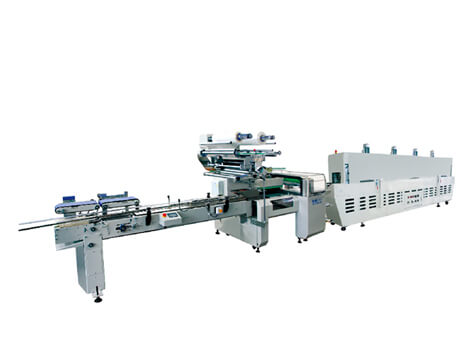
Shangbaotai noodle packaging equipment shown in the company's product imagery. The final line arrangement depends on the approved SKU and RFQ scope.
For cup and bowl projects, volume alone is not a machine specification. Two containers sold as the same size can differ at the rim, base, sidewall, and stacking point. Send dimensioned drawings and physical samples of the container and lid from the intended material suppliers. Include nesting pitch, allowable deformation, cake clearance, and whether the pack requires a separate cap, heat-sealed lid, sleeve, or overwrap.
Give the exact sequence for loading the cake and each seasoning item. A cup that accepts the cake may still leave too little room for a powder sachet, oil sachet, fork, or lid. Define orientation and placement tolerances, and state how missing, doubled, or misplaced items should be detected. If the packaging claim depends on seal integrity, provide the buyer's test method and pass limit; do not ask the machine supplier to guarantee shelf life from the sealer alone.
Shangbaotai publishes a customized bowl and cup sealing machine with noodle delivery, container supply, cap handling, and defective-product removal described on its product page. The page does not establish compatibility with the buyer's specific cup, bowl, lid, sachets, or output target. Request a trial with the actual packaging components.
A retail carton can contain a wrapped noodle cake, an unwrapped cake with a separate food-contact barrier, or another approved inner pack. That choice changes the required primary packaging, product protection, and food-contact review. Define the complete contents and insertion order: cake, seasoning sachets, instructions, utensil, or promotional insert where applicable. Give the carton dieline, board stiffness, opening direction, tuck or glue closure, and the intended display face.
Ask for a separate retail-cartoning scope: blank-carton feeding, erecting, product loading, leaflet or sachet insertion, closure, coding, inspection, and reject discharge. State whether the cartons leave the machine as individual retail units or go to a later multipack or shipping-case operation. If several carton sizes are planned, request change parts and a demonstrated changeover time for each size.
There is an important scope boundary on Shangbaotai's public website. Its “High-speed Automatic Carton Packing Machine” page describes loading cups and bowls into boxes; that page alone does not confirm a machine for directly filling consumer-facing retail paperboard cartons with noodle cakes. Ask Shangbaotai to state in writing whether it supplies, integrates, or excludes the retail-carton operation described here.
List every powder, oil, sauce, and vegetable sachet by SKU. Give dimensions, thickness, weight range, surface behavior, and whether sachets arrive loose, on a strip, or in another presentation. Specify the required count and placement per pack, how variants are matched to the noodle SKU, and what happens if a sachet is absent or doubled. Separate sachet manufacture and filling from sachet feeding into the noodle pack; a packaging-line quotation may cover only the latter.
For bag, cup, bowl, and carton formats alike, request a detection and rejection plan. The plan should identify what is actually measured, where the reject goes, and how a rejected unit is prevented from reaching accepted output. If a requested check is not feasible with the proposed equipment, the supplier should state the gap and offer a testable alternative.
Give both upstream noodle-cake output and the required saleable packs per minute for each SKU. Include shifts per day, operating hours, planned changeovers, and the test duration. For cup and bowl equipment, clarify whether a published figure counts containers handled, sealed units, or inspected and accepted packs. For retail cartons, distinguish cartons per minute from cakes or sachets per minute.
Ask suppliers to identify the bottleneck, number of lanes, buffer capacity, and response to upstream and downstream stops. A quoted speed for one machine is not an end-to-end guarantee. The acceptance plan should test a difficult cake, the smallest or most demanding pack, seasoning insertion, coding, inspection, and changeover with representative materials. Record accepted output, damage, missing components, seal or closure defects, and rejects under agreed operating conditions.
Draw the line from the noodle-cake handoff to the approved retail pack. Mark who supplies each conveyor, feeder, wrapper, cup or bowl sealer, retail cartoner, coder, inspector, reject unit, control panel, and guard. Show floor dimensions, access, ceiling limits, electrical supply, compressed air, and any other utility the selected process requires. For an expansion project, add the existing machine models, conveyor heights, lane arrangement, and control-interface requirements.
Use Shangbaotai's noodle packaging machine range to identify relevant published equipment. Ask for a proposal matrix showing, for every SKU, what is supplied, optional, provided by another vendor, or excluded. Require drawings, material samples needed for trials, change parts, operator access, spare-parts scope, and the exact tests used for acceptance.
One row per SKU: format, cake type and dimensions, pack contents, target accepted output, launch priority, and future options.
Physical noodle cakes plus films, cups, bowls, lids, cartons, and seasoning sachets from the intended suppliers.
Dimensioned package drawings, material specifications, artwork, coding position, and closure or seal criteria.
A product flow showing upstream handoff, packaging stages, inspection, reject handling, and downstream discharge.
Site layout, utilities, current equipment interfaces, operating schedule, and required product changeovers.
Trial and acceptance criteria for every launch SKU, including damage, missing components, closure quality, and accepted packs per minute.
Do not assume that one machine covers all four formats. Ask for a format-by-format equipment map showing shared modules, separate modules, change parts, and the output demonstrated for each SKU. A single supplier may propose several connected machines.
Send a SKU list, cake and package samples or dimensioned drawings, contents per pack, target accepted output, and a sketch of the existing line and available floor space. Mark unknown material or process details as open items so the supplier can price the required trials and options.
Not necessarily. Filling and sealing a powder or oil sachet is a different operation from placing a finished sachet beside a cake or inside a container. Ask the supplier to identify the start and end point of its sachet scope, plus count verification and reject handling.
That depends on the actual rim geometry, height, nesting behavior, lid material, sealing method, and required output. Submit both container and lid samples. The supplier should list change parts and test seal quality for each format.
No. The public page describes cup and bowl products being loaded into boxes. A proposal for a consumer-facing carton filled with noodle cakes needs its own equipment scope, sample trial, and written confirmation of who supplies and integrates it.
State the required inspected and accepted packs per minute for each launch SKU, measured over an agreed trial period. Also record upstream cake supply, reject rules, and the effect of normal stops and changeovers. An advertised wrapper or sealer speed is only one part of that result.
Send this package through Shangbaotai's inquiry page. Ask the supplier to return a format-by-format flow diagram, equipment boundary, options and exclusions, sample requirements, and a trial plan. For the retail carton in particular, require explicit confirmation of the proposed supplier and loading method before comparing quotations.
